Spotify New Release 101: What Really Happens When I Drop a Track (And How You Can Help It Blow Up)
8 months ago
You know that feeling when you’re scrolling through Spotify and suddenly a brand-new track from an artist you love just… appears? Like magic?
Yeah, it’s not magic. It’s a mix of digital distribution, personalized recommendations, and, spoiler alert, YOUR help as a fan.
Let me pull back the curtain on what happens when I release a new saxophone track on Spotify. More importantly, I’ll show you how you can help it reach more ears.
THE MOMENT I HIT “RELEASE” (SPOILER: NOTHING HAPPENS… YET)
Here’s something many people don’t realize: releasing music on Spotify isn’t like uploading a photo to Instagram. I don’t just log into Spotify and hit “publish.”
First, I work with a digital distributor. Companies like DistroKid, CD Baby, or TuneCore act as the middleman between me, a humble saxophonist trying to make smooth jazz cool again, and streaming platforms like Spotify, Apple Music, and Amazon Music.
I upload my finished track and fill in the details, including the song title, album art, genre, and release date. Then I wait. Spotify recommends delivering music at least seven days before release so there’s time for it to be processed and, if I pitch a song, considered for Release Radar.
And then comes the nail-biting part: hoping the algorithm gods smile upon my music.

WHAT SPOTIFY’S RECOMMENDATIONS DO WITH MY TRACK
Spotify recommendations are personalized. The platform says listening, searching, skipping, and saving music to Your Library can all help shape your taste profile. That’s one way Spotify gets clues about what you might want to hear next.
You may come across the term BaRT, short for “Bandits for Recommendations as Treatments,” in technical discussions about recommendations. It’s not a secret checklist telling artists exactly how to get a song promoted. Spotify doesn’t publish a simple formula or a specific skip threshold that guarantees a track will reach more people.
So yes, listener behavior matters. But it doesn’t mean every save or play automatically triggers a big playlist moment. Recommendations depend on many signals, and the details can change.
THE GOLDEN WINDOW: RELEASE RADAR AND YOUR FIRST WEEKS
Here’s where things get REALLY interesting, and where you come in.
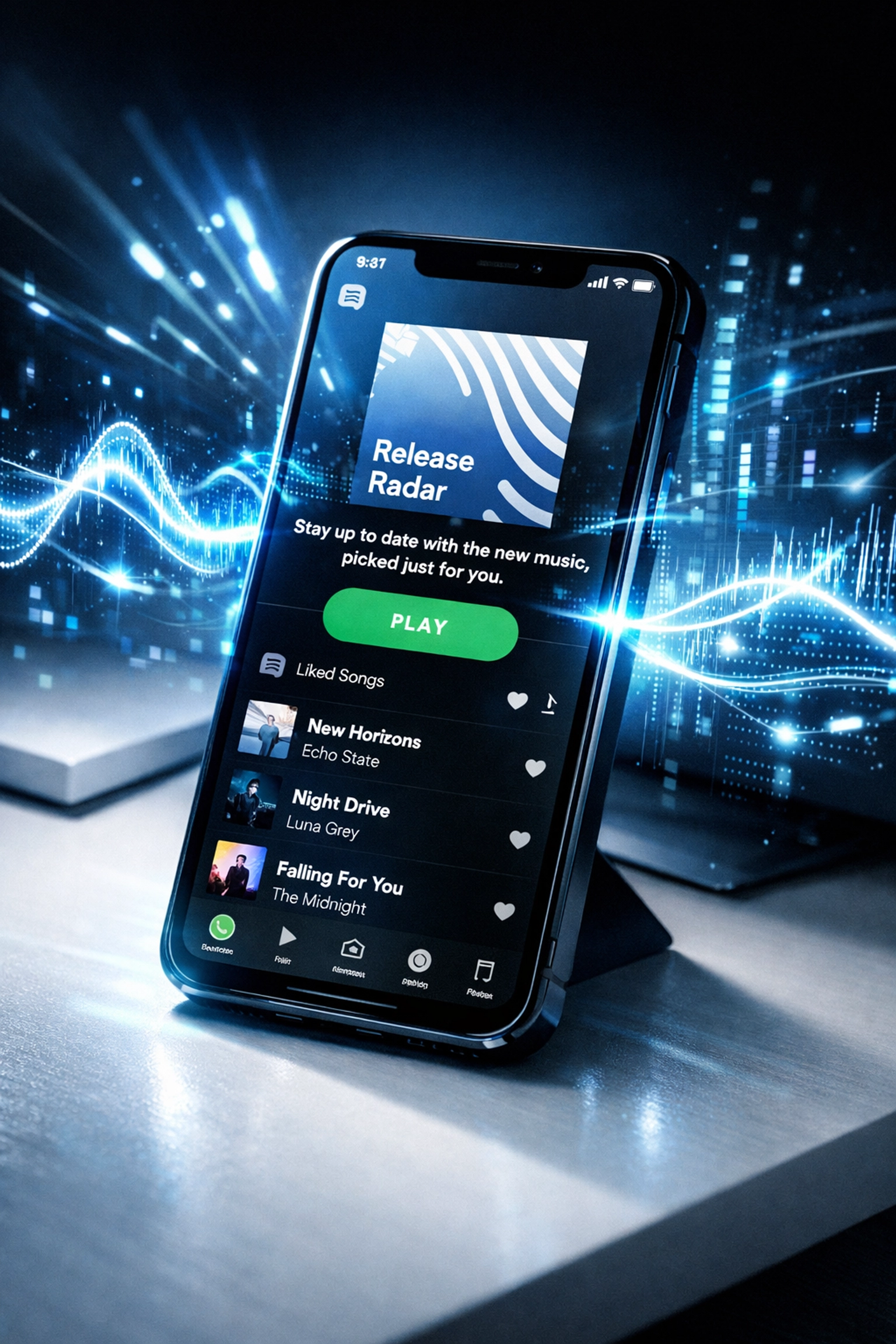
Release Radar is a personalized playlist that updates every Friday with new music Spotify thinks each listener may enjoy. It can include releases from artists they follow, artists they listen to, and other artists Spotify thinks they might like.
Here’s the useful detail: according to Spotify, a song can appear in a listener’s Release Radar for up to four weeks if they haven’t heard it already. Each listener gets only one song per artist per week, so the specific track they see can depend on the release and Spotify’s selection. If I pitch a song at least seven days before release, Spotify says that song will be included in my followers’ Release Radar playlists.
That makes following an artist a great way to keep up with new music. It’s not a guarantee that every release will appear for every follower, but it gives Spotify a clear signal that you want to hear from that artist.
HOW SPOTIFY DECIDES WHAT TO RECOMMEND
Let’s say my track connects with listeners. People are listening, saving, and sharing it. What happens next?
Spotify may recommend music in places like personalized playlists and the Home feed based on a mix of factors. Its recommendations may reflect a listener’s past activity, the music itself, and how other listeners interact with it. The exact mix varies, and Spotify doesn’t promise that any one action will land a song in a particular playlist.
Think of it less like a guaranteed snowball and more like helping Spotify understand who might enjoy the track. If someone listens to a saxophone track and likes it, Spotify may learn that this kind of music fits their taste. If someone skips it, that can also be a clue about what they want to hear.
The most important thing is that listeners respond honestly. If you enjoy a track, save it or play it again because you want to. No tricks required.
HOW YOU CAN HELP MY TRACK FIND MORE LISTENERS
Alright, enough about algorithms and distribution. Let’s talk about what YOU can actually do when I drop a new track. Trust me, the small things make a difference.
1. CHECK OUT THE PRE-SAVE
Before a release, I may share a pre-save link. Depending on the release and the tool being used, pre-saving can help make sure you find the music when it’s available. Spotify’s Countdown Pages, for eligible releases, let fans pre-save an upcoming album or EP.
A pre-save is a handy way to show you’re looking forward to a release, but it isn’t a promise of playlist placement or algorithmic promotion. Think of it as an easy way to be ready on release day.
2. FOLLOW ME ON SPOTIFY
Remember how Release Radar can include new music from artists you follow? That’s why this one is a good place to start.
Follow Michael J Thomas on Spotify so it’s easier to keep up with new releases. Following doesn’t mean every track is guaranteed to show up in your playlist, but it helps Spotify know which artists you want to hear from.
It’s a simple click that makes a world of difference to me.

3. ADD IT TO YOUR PERSONAL PLAYLISTS
This is one of the best ways to keep a track close at hand. Add my song to your “Chill Vibes” playlist, your “Work Focus” mix, or your “Driving Home” rotation if it fits.
Saving music and adding it to your library can help Spotify understand what you like. And if your playlist is public, your friends might discover my music too. Win-win.
4. SHARE IT WITH A FRIEND
I get it. You don’t want to be that person constantly posting “Check out this song!” on your Instagram story. But if you genuinely like a track, sharing it can help someone else find it.
Even a quick note like “New Michael J Thomas track is 🔥” or “This saxophone solo is smooth as butter” can send a few new listeners my way. That kind of personal recommendation means a lot.
5. LISTEN BECAUSE YOU ENJOY IT
I know attention spans are short. I know you’ve got 50 other songs in your queue. If you enjoy my track, listen all the way through and come back to it when you want to hear it again.
Spotify considers listening and skipping among the actions that can shape recommendations. There’s no magic number of seconds you have to listen, and you don’t need to force a play. Just enjoy the music.
TWO WEEKS BEFORE RELEASE: MY SECRET WEAPON
Here’s a pro tip from the trenches: I aim to pitch my focus track to Spotify’s editorial playlist team before release.
Spotify for Artists lets eligible artists pitch an upcoming, unreleased song to playlist editors. Spotify recommends submitting at least seven days before release. I like to plan ahead, ideally around two weeks, so I have time to prepare the release and share the news with you.
In the pitch, I can include details about the genre, mood, and story behind the song. Editors decide whether a track fits a playlist, so pitching doesn’t guarantee placement. It does, however, give them a chance to hear about the music before it comes out. You can read more in Spotify’s guide to pitching music to playlist editors.
WHY CONSISTENCY MATTERS (AND WHY I KEEP RELEASING MUSIC)
You might be wondering: Why not just release one perfect track and call it a day?
Because each release is another chance to share music, connect with listeners, and let new people discover what I do. Over time, a growing catalog also gives listeners more ways to find a song that fits their mood.
That’s why I’m constantly working on new material, whether it’s a full album like Driven or City Beat, or a single to keep the music coming. You can check out what’s new on the Michael J Thomas website.
THE BOTTOM LINE: WE’RE IN THIS TOGETHER
Look, I could spend thousands of dollars on ads, PR campaigns, and playlist pitching services. And honestly? Sometimes I do.
But none of that matters as much as YOU, the real fans who show up, listen, share, and support the music.
When you follow me on Spotify, save a song you love, add it to a playlist, or share it with a friend, you help more people find the music. There’s no guaranteed path from one play to a huge playlist, but your genuine support helps independent music keep moving in an industry shaped by algorithms and major label marketing budgets.
So next time I drop a new track, remember that simple actions like hitting follow, adding a song to a playlist, or sharing it with a friend can make a difference.
And that, my friends, is how we make a track blow up together. 🎷