

You know that feeling when you're scrolling through Spotify and suddenly a brand-new track from an artist you love just... appears? Like magic?
Yeah, it's not magic. It's a wild combination of digital distribution wizardry, algorithmic sorcery, and (spoiler alert) YOUR help as a fan.
Let me pull back the curtain and show you what actually happens when I drop a new saxophone track on Spotify, and more importantly, how you can be the secret weapon that helps it reach thousands of ears instead of just dozens.
The Moment I Hit "Release" (Spoiler: Nothing Happens... Yet)
Here's the thing most people don't realize: releasing music on Spotify isn't like uploading a photo to Instagram. I don't just log into Spotify and hit "publish."
First, I work with a digital distributor, companies like DistroKid, CD Baby, or TuneCore, who act as the middleman between me (a humble saxophonist trying to make smooth jazz cool again) and streaming platforms like Spotify, Apple Music, and Amazon Music.
I upload my finished track, write out all the metadata (song title, album art, genre, release date), and then... I wait. Usually about two weeks before the release date, everything gets sent to Spotify's servers.

And then comes the nail-biting part: hoping the algorithm gods smile upon my music.
What Spotify's Algorithm Actually Does With My Track
The second my track goes live, Spotify's AI system, a fancy piece of tech called BART (Bandits for Recommendations by Treatments, because apparently even algorithms need cool acronyms), kicks into gear.
It starts analyzing EVERYTHING:
- How many people play it in the first few hours
- How long they listen before skipping
- Whether they save it to their personal playlists
- If they share it with friends
- Whether they come back and replay it
Basically, Spotify is watching my track like a talent scout at an open mic night, deciding whether to give it a shot at the big leagues (algorithmic playlists) or let it fade into the digital abyss.
The Golden Window: Release Radar and Your First Three Weeks
Here's where things get REALLY interesting, and where you come in.
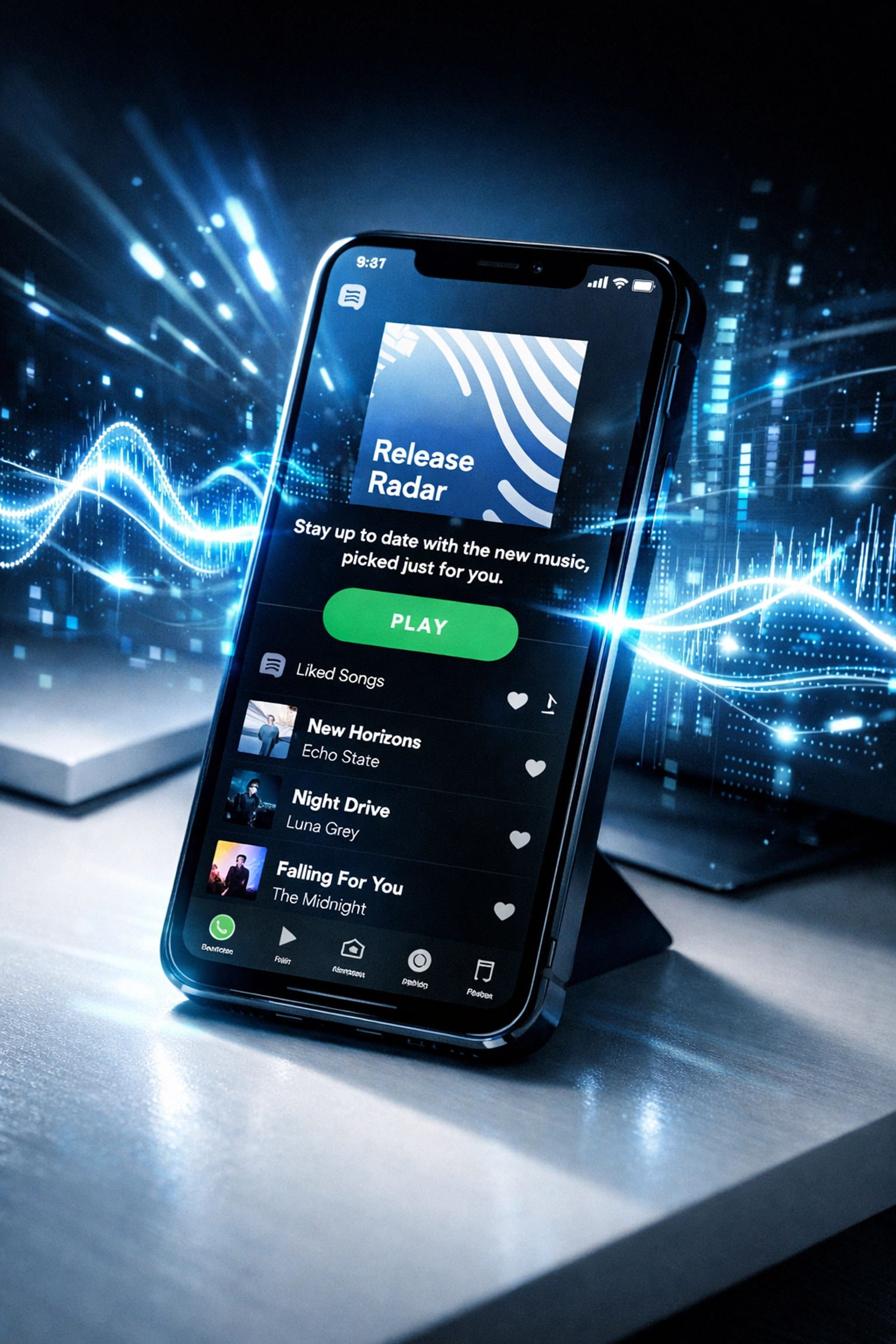
When I release a new track, it automatically gets added to something called Release Radar. This is a personalized playlist that Spotify creates for each user every Friday, filled with new releases from artists they already follow or listen to regularly.
Sounds great, right? Here's the catch: Spotify only includes my track in Release Radar for the first three weeks after release. After that? It moves to Discover Weekly playlists, which are much harder to crack.
Those first three weeks are absolutely critical. According to Spotify's own data, Release Radar drives MORE streams than even editorial playlists. But here's the kicker, my track only shows up in Release Radar playlists of people who already follow me or have listened to my music before.
Translation: The more followers I have, the more Release Radar playlists my track reaches, and the better its chances of getting picked up by Spotify's algorithm for broader promotion.
How the Algorithm Decides to Promote My Music
Let's say my track does well in those first few weeks. People are listening, saving, sharing, all that good stuff. What happens next?
Spotify's algorithm starts testing my track in other playlists, like Discover Weekly, Daily Mix playlists, and even genre-specific algorithmic playlists. If listeners continue engaging with it (not skipping, listening all the way through, adding it to their own playlists), the algorithm keeps pushing it to more and more people.
It's like a snowball effect. The more engagement my track gets, the more Spotify promotes it. The more Spotify promotes it, the more engagement it gets.
But here's the brutal truth: If people skip my track within the first 30 seconds, the algorithm takes that as a signal that it's not resonating. And just like that, the promotion stops.
The average listen time is HUGE. If listeners stick around for the smooth sax solo at the 90-second mark? That tells Spotify, "Hey, this track is worth recommending to others."
How YOU Can Help My Track Blow Up (Seriously, You Have More Power Than You Think)
Alright, enough about algorithms and distribution. Let's talk about what YOU can actually do to help when I drop a new track. Trust me, this stuff makes a massive difference.
1. Hit That Pre-Save Button
About two weeks before I release a track, I'll share a pre-save link on social media. When you click it and pre-save the track, Spotify automatically adds it to your library the second it goes live.
Why does this matter? Because pre-saves count as immediate engagement the moment the track releases. It signals to Spotify that people are excited about this music, which boosts its chances of getting recommended to others.
2. Follow Me on Spotify
Remember how I mentioned Release Radar only reaches people who already follow me? Yeah, that's why this one's crucial.
When you follow Michael J Thomas on Spotify, my new releases automatically show up in your Release Radar playlist. More followers = more Release Radar appearances = more streams = more algorithmic love.
It's a simple click that makes a world of difference.

3. Add It to Your Personal Playlists
This is one of the most powerful things you can do. When you add my track to your own playlists: whether it's your "Chill Vibes" playlist, your "Work Focus" mix, or your "Driving Home" rotation: Spotify takes notice.
User-generated playlists signal genuine interest. The algorithm sees that you didn't just listen once and bounce: you actually liked the track enough to save it and listen again.
Plus, if your playlist is public, your friends might discover my music too. Win-win.
4. Share It on Social Media
I get it: you don't want to be that person constantly posting "Check out this song!" on your Instagram story. But here's the thing: social sharing drives traffic directly to Spotify, and that traffic sends positive signals to the algorithm.
Even a quick share with a caption like "New Michael J Thomas track is 🔥" or "This saxophone solo is smooth as butter" can send a handful of new listeners my way.
And honestly? Those handful of listeners might be the difference between my track getting picked up by an algorithmic playlist or getting buried.
5. Listen All the Way Through (At Least Once)
I know attention spans are short. I know you've got 50 other songs in your queue. But if you can listen to my track all the way through: even just once: it tells Spotify that the music is engaging enough to hold attention.
Skips hurt. Full listens help. It's that simple.
Two Weeks Before Release: My Secret Weapon
Here's a pro tip from the trenches: I always pitch my focus track to Spotify's editorial playlist team at least two weeks before release.
Spotify for Artists has a built-in tool where I can submit unreleased tracks with details about genre, mood, and the story behind the song. If the editorial team likes it, they might add it to one of their official playlists: which is basically hitting the jackpot.
But even if I don't get editorial playlist love, submitting early ensures Spotify's algorithm has time to properly categorize my track and get it into the right Release Radar playlists from day one.
Why Consistency Matters (And Why I Keep Releasing Music)
You might be wondering: Why not just release one perfect track and call it a day?
Because Spotify's algorithm rewards consistency. The more quality music I release, the more data Spotify has to understand my sound, my audience, and where my music fits in the streaming ecosystem.
Plus, each new release is a chance to show up in Release Radar again. It's a chance to remind existing fans I'm still making music and to attract new listeners who might stumble across my latest track.
That's why I'm constantly working on new material: whether it's a full album like Driven or City Beat, or just dropping singles to keep the momentum going.
The Bottom Line: We're In This Together
Look, I could spend thousands of dollars on ads, PR campaigns, and playlist pitching services. And honestly? Sometimes I do.
But none of that matters as much as YOU: the real fans who show up, listen, share, and support the music.
When you pre-save a track, follow me on Spotify, add songs to your playlists, and share them with friends, you're not just helping Michael J Thomas the artist. You're helping keep independent music alive in an industry that's increasingly dominated by algorithms and major label marketing budgets.
So next time I drop a new track? Just know that your simple actions: clicking pre-save, hitting follow, adding to a playlist: are the difference between my music reaching 100 people or 10,000 people.
And that, my friends, is how we make a track blow up together. 🎷